
The RACE Summit: embodying climate justice through intersectional action
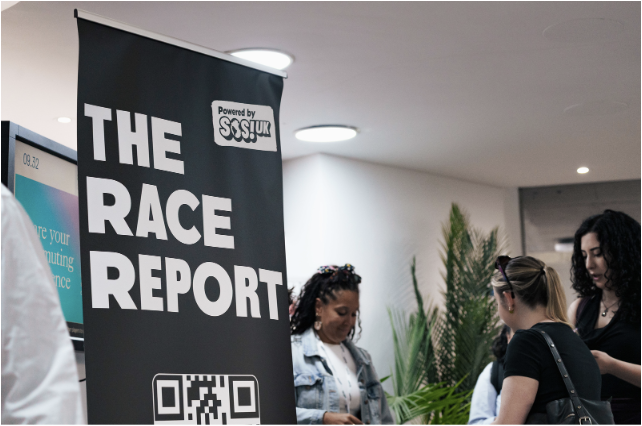
Image by Byran Ferrol
When we face difficult truths, as the Climate Psychology Alliance aspires to, we must also face the shadows within ourselves; our complicities, our complacencies and our collusions. At the RACE Report Summit 2025, shadows such as these were brought into the light.
Organised and facilitated by Students Organising for Sustainability (SOS UK) and the Diverse Sustainability Initiative, the summit expanded the work of the RACE Report. This is a survey-based analysis of the racial diversity in the environment, climate, conservation and sustainability sectors, intended to drive Racial Action for the Climate Emergency (RACE), using principles of equitability, transparency and pluriversality. This is not simply intended to increase the representation of Global Majority and other marginalised groups, but to drive meaningful, embedded change across these sectors, as part of achieving climate justice.
We write from different but complementary experiences of marginalisation, encompassing age, race, disability, neurodivergence, gender and sexuality. We both, in our different ways, know what it is to be in a space and feel Other, know what it is to expect to feel Other in almost every space. It is alienating, suffocating, a dampener that makes it not only hard to speak but sometimes hard to think. It is an experience of hyperawareness, monitoring oneself and other people in an attempt to identify the unspoken rules - the etiquette, norms and customs which unconsciously drive the dynamics of who holds space, how responses are made, which forms of conflict or disagreement are permissible, what ‘making trouble’ looks like. It can mean working so hard to toe this invisible line that any authentic engagement is quashed.
Our lived experiences of marginalisation
(Thulsi) As a young woman of colour, I have encountered various forms of discrimination in the countries I’ve lived in and throughout my career. Growing up across different cultures has shaped a complex and often confusing identity, fuelling a lifelong quest for belonging. Being ethnically Asian, I often feel ‘too Westernised’ in Asia, but ‘too Asian’ in the West. There are very few moments I can recall where I have felt able to show up in spaces as my truest self, fully embodying my intersectional nature. As someone who deeply values authenticity, it is painful to navigate environments where I cannot live in alignment with my beliefs. The tension between who I am and and how I am perceived often feels like a quiet, persistent dissonance - one that not only challenges my sense of self, but also my ability to fully engage with the world around me.
(Jenny) I am a queer, neurodivergent, non-binary white person, with multiple disabilities and mental illness. I grew up in a working class area of the UK, where the people around me were acutely aware of the limitations of existence for ‘people like us’. It was made explicitly clear to me, on multiple occasions, that there was no space to engage with my intersecting identity characteristics. My disabilities were seen as a burden to others; I should rise above them. My queerness was an ‘attention-seeking’ desire to be special; I should keep it to myself. My neurodivergence was ‘being difficult’; I should be more compliant. I have led a life where navigating spaces means constantly meeting obstacles and barriers which do not exist for everyone.
Our experiences are not unique. The processes of marginalisation echo the processes of environmental exploitation and destruction; both are rooted in the same internalised dynamics of imperial ideology. In the words of Farhana Sultana [1] “we are all expected to be resilient because we have no choice”.
This is why increasing the representation of marginalised folks across climate, environmental, and similar sectors is not enough [2]. It is not enough to include us; this is tokenism, granting limited entry under an assumption that the space is still not ours. What is required is a cultural and attitudinal shift. What is required is the embodiment of climate justice.
The RACE Summit: a space for radical change
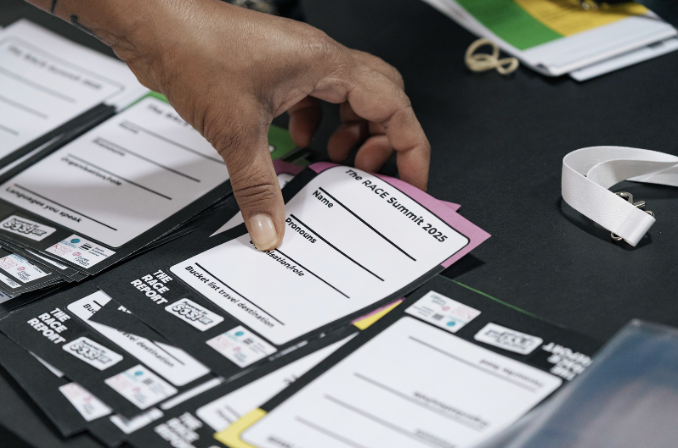
Image by Byran Ferrol
The RACE Summit was a truly intersectional space where a huge range of people working in the environmental field came together with the express purpose of diversifying the sector. We experienced the profundity of kinship, understanding and radical empathy, where the work of ‘fixing’ injustice was a co-created project, not the responsibility of a few - usually marginalised - people.
The Summit itself included workshops on ‘How age intersects with power, leadership and belonging’, ‘Embodied empowerment for climate justice’, ‘Creative collaboration and allyship’, ‘Empowering inclusion work within organisations’, and much more. There were structured conversations, creative practices, music-centred engagement, group discussions, internal reflective spaces; the list goes on. The result was the feeling of a shared culture of care, something all participants were jointly responsible for, and which was contained within a (mostly) accessible framework.
This isn’t to say the Summit was flawless. There was confusion and disagreement, misunderstandings, communication failures, and accessibility blind spots. Timekeeping became increasingly strained as the day went on; perhaps this unconsciously represented a desire to resolve all issues of climate racism in a single day, or expressed a wish to maintain the experience of not feeling Othered for as long as possible. What was clear throughout, however, was the collective intentionality in co-creating and maintaining a culture of genuine care and curiosity.
Moving beyond representation towards cultural transformation

Image by Byran Ferrol
It is this which we would most like to see taken up by the members of the Climate Psychology Alliance: we want decolonisation to move beyond being a task to being part of our embodied practice. We want to encourage all members to consider their positionality and how they might use this to empower others. We want to challenge the structures, norms and assumptions which inhibit open, authentic dialogue. We want the culture of CPA to reflect our stated values [3], particularly that of active engagement against discrimination.
The climate and biodiversity crises are discriminatory by nature. They are racist, ableist, ageist, sexist. The colonial processes of extraction, exploitation and appropriation are unconsciously replicated, through the society-in-the-mind and other processes. The imperial project of homogenisation is likewise unconsciously replicated. Only by actively, intentionally, and continually working to build deliberately oppositional alternative spaces can we ensure that our practice - our ways of being in the world in relation to one another - is one of climate justice.
Notes
[1] Farhana Sultana (2022) The Unbearable Heaviness of Climate Coloniality. Political Geography, Vol.99, Article 102638. Available at: https://www.sciencedirect.com/science/article/abs/pii/S096262982200052X
[2] Only 4.5% of people working in environmental organisations identified as people of colour or coming from racially/ethnically marginalised groups, according to RACE Report 2024 statistics. See reports here.
[3] The Climate Psychology Alliance values can be found here.
Author's Bios
Jenny O'Gorman is a queer, disabled, working-class person and currently sits on the CPA Board. They work as a psychotherapist, writer and editor. Jenny is also a climate justice and disability rights activist. They live in Gloucester with their partner, son, and an ornamental stone cat.
Thulsi Prabakaran is a sustainability professional whose work focuses on holistic strategies that drive education, awareness and cultural change. Being a young woman of colour working in the sector, she is passionate about leveraging diversity and inclusion to help tackle climate change and achieve a just future for all. She lives in Cambridge with her family and two guinea pigs.