I wished to harvest the light, so bright and abundant, yet so fragile and momentary, blooming in my friend An’s eye on the eve of the Lunar New Year in 2026. It was like a wishing star piercing through the darkness, and coating the wheat field that is her eyelashes with its glittery hope. An - a Vietnamese-born-and-raised- freshly planted herself into college in a foreign country. For the first time in 18 years, she experienced what it feels like to be around a group of people who care deeply about nature and humanity, and has realised that it is not a myth. People can be genuinely kind, loving, and caring towards others as well as the planet.
It was the kind of light that you anchor on to settle all your worries for the day before drifting into the dark embrace of sleep. The light that is different not visually but by feeling - your gut recognises it, a similar sensation. Once you have seen it, the ground you stand on changes.
I wish more of my people could experience that light.
And I wish more of my people could also see the similar light: the moment they re-know (because I do think parts of them deep down know) that living in harmony with nature is not a myth.
And I wish more people understood that both sources of light above are connected.
A sad reality is that, perhaps ever since the rational capitalist mindset was expanded through colonialism in Vietnam, nature has been exploited and oppressed. The main mechanism for this was the land reform policy, which was framed as shifting “wasteland” into productive land1. Memory of the land and its people gradually faded. In central Vietnam, indigenous herders, animals, and vegetation were replaced with cash crops such as acacia or eucalyptus. More insidiously, this mindset pervaded the southern landscape; even after the independence of the Socialist Republic of Vietnam, dikes were still constructed to maintain stable conditions for intensive crop production in the Mekong Delta. But the river has been anything but stable, and the construction of such domestic dams, amplified by large-scale dams in upstream China, has been blocking aquatic species migration pathways, sediment flow, and the overall nutrient cycle.
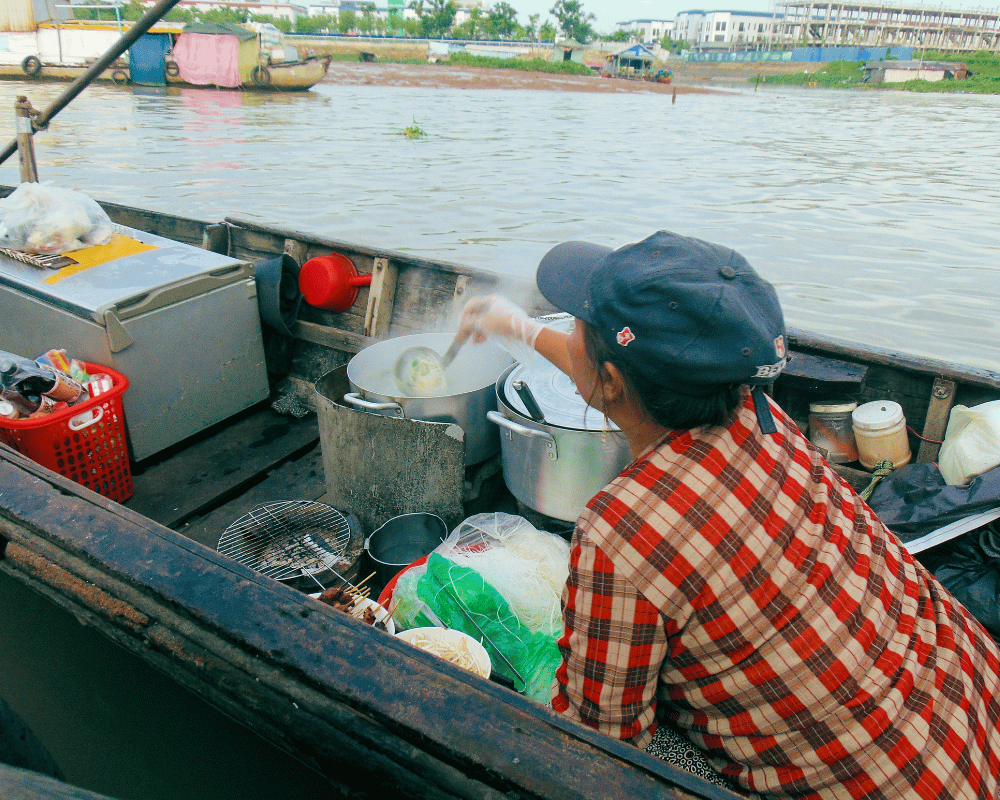
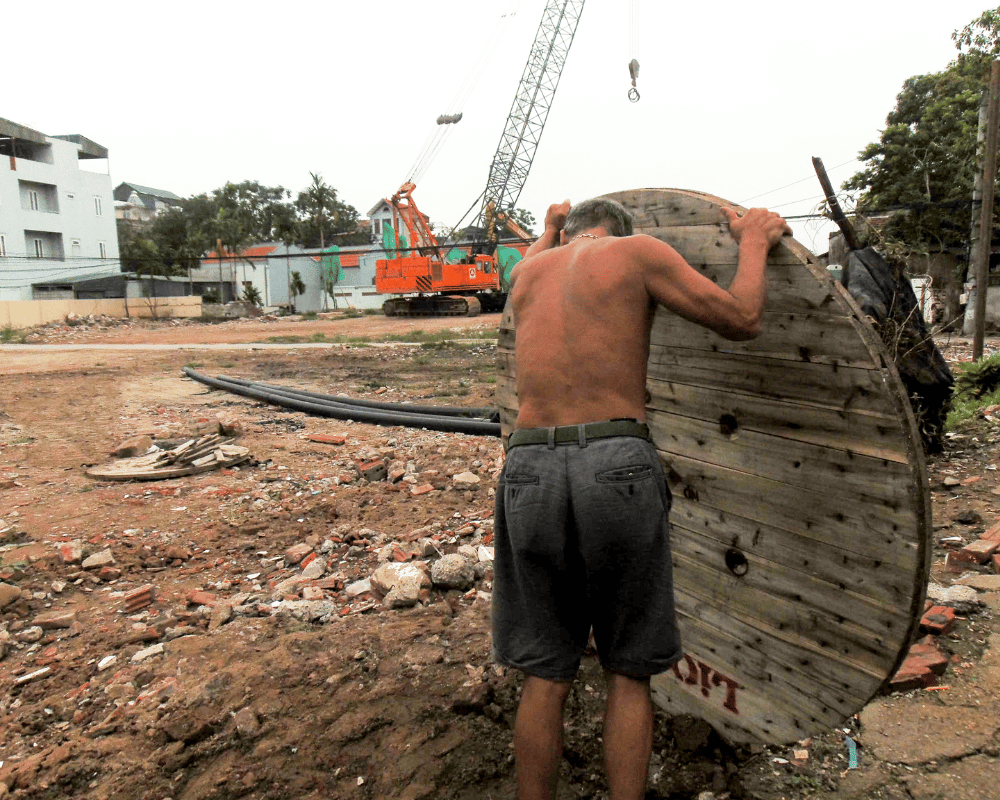
On a social level, this legacy is still traversing time and space, a concept known as slow violence. Herders and farmers, who have always lived and worked seasonally and according to the rhythm of the land, were stigmatised as lazy and narrow-minded. Political reform also stripped away their agency and ownership of the land. The workforce has thus seen more of a push into mechanisation - with productivity, efficiency, and modernity carved into its tagline. Unfortunately, this shift in Vietnam was also inflamed by patriarchal ideology, which, for thousands of years, has arguably had its good morals overpowered by status-driven and power-grabbing cornerstones. One outcome of this is the overwhelming number of male architects and engineers2, whose power has been expanding as the country becomes more technocratic3. Returning to Hanoi in the summer of 2026, I was heartbroken to converse with locals whose houses had been gentrified and the Red River being scoured away to optimise space for an amusement park and a luxurious residential area, all for the purpose of generating wealth without any regard to the environment.
A more upsetting psychological legacy lies in the way that armed conflict and its consequences instilled an eternal fear in my people. It is as if (or perhaps because) war has never left us, but morphed into a more complex and mischievous system of violence. I would like to briefly explore this complexity from a youth perspective.
The youth - mostly those belonging to the Gen Z and Alpha generations - are the economy's key point of growth whilst simultaneously bearing the ecological amnesia and postmemory imprinted by war. The first half of Gen Z perhaps still experiences boredom and has an urge to seek out fun and the mystery of insects, plants, rocks, and rivers in nature. The latter half of this generation, however, is slowly rotting their brains by overstimulation from digital technology.
If Western countries have been considering the banning of social media for children, in Vietnam such a solution does not seem to address the coupled problems of the economy and education. Caregivers (mostly women), under the influence of utilisation, are treated like machines without any consideration for their wellbeing. A kindergarten class of 50 students - handled by only one female teacher - has been the norm, and so has my personal experience. Yet, it is still puzzling for some people to see how much kids are physically abused in the classrooms by female teachers, who bear insurmountable societal pressure. Therefore, a technological fix like social media, though it has led to so many other mental illnesses, has, paradoxically, relieved the burden from caregivers.
Moving to a higher level of education, kids also internalise a tremendous sense of competition, which again is the result of Confucian ideology and a deeper sense of survival coupled with economic prosperity. It doesn’t take long until they succumb to the idea that “earthly gifts” (a term used by Robin Wall Kimmerer) are mere resources to be exploited and become less viable. Their memories of ecological knowledge erode; environmentalism becomes less appealing or is regarded as the privilege of the West. They ultimately uphold whatever economic strategy is disseminated from the government (arguably elders who have sadly been traumatised and forever chained in the global system of violence), regardless of how disastrous the environmental consequences are. This is because of a common sense that the government, wiser than us all, will fend Viet people from another armed conflict. Not that the younger generation doesn’t care – seeing children in summer camps and my friend going to the park after a stressful day, you cannot say these people don’t care or long for nature – it’s a struggle for every atom of their body to get out of survival mode.
Yet as a reader of this piece, you know that clearly a global challenge like climate change or environmental justice requires international cooperation. How, then, do people of a nation so immobilised by fear take part?
A taste of this answer, from my quest, has felt a bit bittersweet. Bitter from the memefication of environmental information floating on algorithmic waves. These youth-led social media contents signify a form of resistance to the systematic injustice that underpins a myriad of problems, with the ecological crisis being one of them. The skewed visuals and text are just enough for people to read between the lines; the fast pace of virality outpaces censorship to reach its target audience, though this dynamic is being changed due to AI-aided content regulation. However, if you look beyond the five seconds of a dopamine rush, you would know that memes function on irony, which is anything but a sustainable way of coping with our underlying longing for love and care. To quote the poet Rainer Maria Rilke on irony: “Don’t let yourself be ruled by it, especially in uncreative moments. In creative ones try to make use of it as one means to get a grasp on life, [...] then turn towards great and serious subjects, next to which irony becomes small and helpless.”
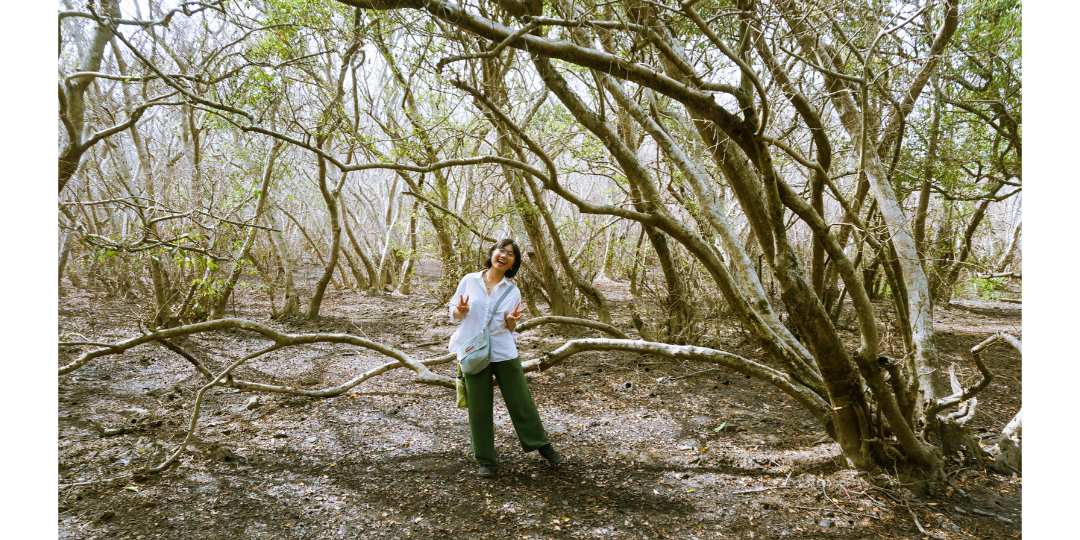
This brings us to the second form of resistance - a sweeter side of this topic I have been mulling over - which is the resprouting of ecological movements in art. In central Vietnam, many artist residency programs that focus on reconnecting traditional flood-resilient landscapes are now flourishing. In southern Vietnam, the Mekong Art Project has been discovering the memory of the delta. In Hanoi, the artist Thuy Anh brought home the work and models practiced in a Berlin art residency on ecological futures. A beautiful intersection between science and art was also explored in scientist/artist Hien Hoang’s exhibition and workshop called “How to Touch the Elephant: Ecological Trauma in Post-Agent Orange Landscape.” Seeing the many lights in participants' eyes at these art-based initiatives, I know that if there is a way forward, it is here: when community comes together for a cause, where emotions are attuned to instead of dampened through a quick button or scroll, and where deep reflection on the ecological and cultural trauma takes place, transforming mental structures in the survivors of a war-torn landscape.
-----------
Notes
- Buggs, D. (2018) Footprints of War: Militarized Landscapes in Vietnam. University of Washington Press. Available at: https://www.jstor.org/stable/j.ctvcwnk0c (Accessed: October 11, 2026).
- Phước L D. Quy hoạch đô thị ở Việt Nam: Lĩnh vực được xây dựng trên tư tưởng nam quyền. Sci. Tech. Dev. J. - Eco. Law Manag.; 5(SI2):112-122
- Vu, A.N., Pham, P.Q. and Le, B.Q. (2022) The Red River planning of Hanoi in the context of urbanisation and modernisation: analysis of media discourse. Available at: http://collections.fes.de/publikationen/450699 (Accessed: October 11, 2026).