
Reflections on the Gaza Digest: Writing about Difficult Truths
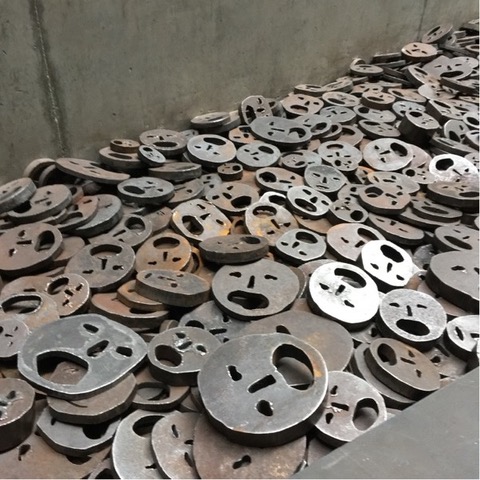
Image credit: Memory void room in the Jewish Museum, Berlin
Introduction
In March 2024, the CPA monthly Digest published a piece by Paul Hoggett, with the title What has Gaza got to do with the climate crisis?. Because of the sensitivity of this topic - the depths of difference between two ‘sides’ of an insoluble predicament and the re-traumatising violence that has been perpetrated by both Hamas and the Israeli Defence Force - a small advisory group to the Digest was involved in reading drafts and thinking together, along with the author and the editor.*|IFNOT:ARCHIVE_PAGE|* Read More *|IF:ARCHIVE_PAGE|*Nearly a year on, as we hear of a fragile cease-fire, this group has been joined by the two co-chairs of CPA for this revisiting of the March Digest. In the interim, three complaints were received (in addition to some appreciative thanks), from a CPA member and from a member of the public reading the Digest on CPA’s public-facing website. The CPA co-chairs and the author took advice from others during a process that eventually led to the decision to temporarily remove the March 2024 Digest from the website.
This decision has been changed with the publication of what you can read below, so that the earlier Digest (climatepsychologyalliance.org) can now be read alongside this. It represents our attempt (seven voices) to reflect on the difficulty of deciding whether such content should be in the public domain when several have complained about what they saw as antisemitic elements. At first the choice was seen as between permanently removing the content from CPA’s website or for the author and editor to modify the piece and reinstate it in that form. This binary choice seemed to reflect the constraining choices that suffocate thinking about this painful area: Palestine versus Israel; the violence of one party versus the violence of the other.
The killings and hostage-taking of Israelis on October 7th 2023 and the ongoing killings of Palestinians in Gaza, the West Bank, and latterly in Lebanon too, are indeed difficult truths to bear and to think about. But CPA’s purpose is to think difficult truths; to help that process and to model it in our own practices. Hence the idea that we would write a further Digest that reflected on the difficulty of what has happened. ‘Digest’: the name is based on Wilfred Bion’s proposition that experience needs to be digested in order to be thinkable, especially when it is hard to bear, a proposition that could apply also to what happens when offence may be taken. Reflection means inquiring into our emotional experience, so as to fully engage with the meaning of what was written; reflection with hearts and bodies as well as minds.
What you will read below comes from seven CPA members who from their different positions and roles are in the process of opening out a further space to think about Gaza and what it has to do with climate change. There could have been a collapse into binary positions here too. For one side, a concern for CPA’s reputation and an anxiety that ‘leaving this content on the public-facing website puts CPA at risk of a formal complaint of antisemitism’; for the other ‘the language of this piece is not discriminatory’ and ‘removing the piece from public view is a further example of the widespread silencing of criticism of the Israeli government’s genocidal violence in Gaza’. Instead we have tried to model a process that went beyond conflictual, binary stances. This is central to the CPA territory of thinking difficult truths and being process-aware.
The language we use is important. We are navigating the ‘borders’ with our language and even that is ‘incendiary’ and ‘explosive’. The responses to the March 2024 Digest represent and mirror the treacherously dangerous territory in such a way that, from a process perspective, we feel like we are treading on landmines. We want to be able to stand in a third position in our thinking because if we cannot do that, what hope is there? We want to try to create a ‘safe zone’ by opening up a different approach to this apparently irreconcilable difference where there has been a no-go area. The references at the end of this Digest provide a rich resource for all readers, as they have been for our thinking.
One of CPA’s co-chairs reflects as follows on her process in relation to her role.
Much of my experience of the response to the original article can be summed up as ‘I didn’t know’. I had not read the piece when it came out in March 2024, before I became co-chair. I did not know that there had been complaints until, as co-chair, I saw the follow-up to one of them. In my life as a citizen in the Global North I have the privilege of not knowing about so much. Suddenly then, as a result of taking on a role, that privilege is rightly revoked and I have to examine what it is that I need to know. In that moment, infused with anxiety and shame, I turn to authority and risk. What does the law say about antisemitism? What are the risks to this thoughtful, reflective organisation I’m now, it seems, responsible for? But when I go back and read the article again, something else comes into focus. It is about compassion (‘suffering with’). There is a phrase in the original article, “despite the Holocaust”, which is the subject of one of the criticisms that we describe below. It is in reading that phrase and noting how it can be read as dismissing the suffering of the Holocaust, that I suddenly feel the question ‘what happened to you?’ that can co-exist with ‘what have you done?’ This feeling of the interconnectedness of harms is what has stayed with me, and has enabled me to stay with the process of contributing to this second piece.
My role does require me to assess risks and pay attention to the legal framework within which CPA operates as an organisation (though when that legal framework begins to outlaw legitimate protest, we have a decision to make about our response). If I can hold compassion, my necessary relationship with the authority of the law and the risks to the organisation can be infused not with anxiety and shame but with fellow-feeling.
The criticisms
In the criticisms received of the original article, there were two sentences that proved contentious. Here is the first (now italicised) and the paragraph containing it, followed by the criticisms:
Perhaps we in the West are afraid to see what is happening, either to the climate or to the Palestinians. I can’t get close to imagining the horror that many Jewish people must feel regarding the events of October 7th. It must surely have re-evoked historical and intergenerational traumas.[1] But we are afraid to face up to the difficult truth that, despite suffering persecution at the hands of Christians for a millennium, despite the Holocaust, Jewish people are themselves capable of becoming perpetrators.
According to one critic, 'The perpetrators are the state of Israel, the military of Israel and the Israeli settlers. To write that the "Jewish people" are the perpetrators is collective blaming, it’s antisemitism'. The critic correctly points out that to speak of ‘the Jewish people’ is to merge all Jews (secular and religious, Israeli and non-Israeli, Zionist and anti-Zionist, etc) into a common mass. The paragraph makes two references to ‘Jewish people’ neither of which were preceded by the reified ‘the’, a practice which then however lapsed when, in the second contested sentence, ‘the Jews’ were referred to.
Here is the paragraph containing the second contested sentence:
We need to remind ourselves that in the census conducted in 1922 (en.wikipedia.org), the population of Palestine was 763,550 of which 89 percent were Arabs and 11 percent Jews. For a century Palestinian Arabs have been subjected to displacement, expulsion and repression by another people, the Jews, who had themselves been subject to centuries of persecution. There is no neat separation between victim and persecutor; these two states of mind exist in all of us, as does the bystander. The comforting distinctions we hold to between good and bad, right and wrong, collapse under the rubble of Gaza.
We now think that it would have been preferable to write 'Israeli Jews in the occupied territories', or 'the Israeli government, military and settlers in the occupied territories'.
A second complaint referred to the positioning of the Holocaust: ‘Why write “despite the Holocaust”? It’s like viewing the Holocaust as a moral lesson for the Jews’. This is at the heart of our co-chair’s response above. The original intention was to make clear that no group, irrespective of their history, can claim to be moral exceptions. As Israel, with apparent impunity, pulverises Gaza, bombs Beirut and interferes in Syria, it seems at times as if there is one rule for the Israelis and another rule for all the other peoples living in the Middle East. We emphasise that speaking out about the perpetrator does not entitle us to dismiss or downgrade the Holocaust. The stance must be one of compassion.
A third critic wondered why, given all of the collective violence the world has witnessed in the last 50 years, particular attention should be given to Palestine: Surely this is just one of many tragedies, some of which are ongoing? Why is it that only now, when one comes along which involves Israel, that people take a stand? The conclusion is that Israel is being singled out and that this is because it represents Judaism. While this may sometimes be the case, for our part Gaza is not the first time some of us have taken a stand. In the early 1990s some were involved in solidarity work with Bosnians during the ethnic cleansing there. As regards Israel, for much of the Global South, it is largely singled out because it represents the West.
Tragedy
Elsewhere, one of us has written:
When the persecuted have become persecutors we are in the territory of the deepest tragedy. […] This is the terrain upon which psychoanalysis has been built. Tragedy arises not when evil triumphs over good but when two goods clash and destroy each other, not when destructive acts occur which take generations to repair but when destruction occurs which is irreparable. There is a terrible symmetry of suffering in such situations but perpetrators nevertheless remain perpetrators. Abused children may grow up to be abusive adults and whilst we may understand the reasons for their destructiveness, to understand is not to condone. (Hoggett 2025: 3)
What, then, of symmetry of suffering in Gaza? In their work as clinicians, therapists are often urged to adopt a neutral stance towards those they seek to help - to be empathic does not mean to accept their client’s point of view. But the idea of neutrality, when extended beyond the consulting room, can disarm the therapist, encouraging them to see all conflicts in a symmetrical way. At first sight there does indeed seem to be a terrible symmetry of suffering in situations such as Gaza but perpetrators nevertheless remain perpetrators. As the suppression of Gaza proceeded, the dominance of Israel became more and more shocking. Like an omnipotent force, the IDF picked off senior Hamas and Hezbollah personnel, seemingly at will; and bunker bombs successfully sought out targets deep underground. Northern Gaza was pulverised, hundreds of thousands of refugees have been reduced to living in tents on Gaza’s beaches, babies starve, and almost every day we heard of another Palestinian family blown to pieces by Israeli jets. No longer is there ‘symmetry of suffering’ here. As Jessica Benjamin put it, we must 'hold the position of two different points - to stand simultaneously for the recognition of all injuries, while at the same time being clear that one side was coming from the position of Occupied and less powerful, the other Occupying and dominating' (Benjamin 2016: 6).
The idea of a cultural complex brings to the idea of tragedy a sense of collective trauma, not just an individual one. Both sides, Israel and Palestine, are steeped in trauma, as Benjamin notes. Such cultural complexes have taken a long time to develop as they attract similar cultural traumas into their gravitational field. Collective grief and rage get constellated in these complexes and lead to both the violence and the impossibility of conceding anything while demanding everything. There are no longer moral limits.
Welcome as suspension of the slaughter and resumption of aid to Gaza is, the precarious situation holds a real possibility of war resuming after the first phase of the complex agreement. Deep doubt remains about how a two-state solution might progress, given views among both the illegal settlers and the Israeli government that the only response to opposition is to suppress it, and a US administration that cares nothing about justice for Palestinians (aljazeera.com). The climate crisis continues, with water scarcity, drought and crop failures fuelling the conflict. The need to speak difficult truths about the situation remains pressing.
Notes
- [1] A moving and thoughtful exploration of how, post Holocaust, the Jewish people escaped from one nightmare only then to visit another nightmare upon the Palestinian people, can be found in a recent conversation (youtube.com) between the Canadian Jewish physician Gabor Maté and his two sons.
- Eyal Rozmarin and Karim Dajani, 'Speaking of Home: An Intimate Exchange on Israel-Palestine', https://analytic-room.com/speakingofhome/.
- CPA member Pedro Oliveira’s response to an image of Gaza destruction – sent on Google forum in response to the Digest. Access via this link (facebook.com).
- Jessica Benjamin (2016) ‘Non-violence as respect for all suffering: Thoughts inspired by Eyad El Sarraj’. Psychoanalysis, Culture and Society, 21(1) p.6.
- Paul Hoggett (2025) ‘Confronting the Inhuman’, Psychoanalytic Psychotherapy, https://doi.org/10.1080/02668734.2024.2429991.
Co-Authors
Paul Hoggett, Kate Adams, Wendy Hollway, Rebecca Nestor, Chris Robertson, Tree Staunton, and Adrian Tait.