
‘It’s an emergency! What’s my job?’ Reflections on the National Emergency Briefing at Westminster, November 2025
by Kate Adams, Rebecca Nestor and Linda Aspey
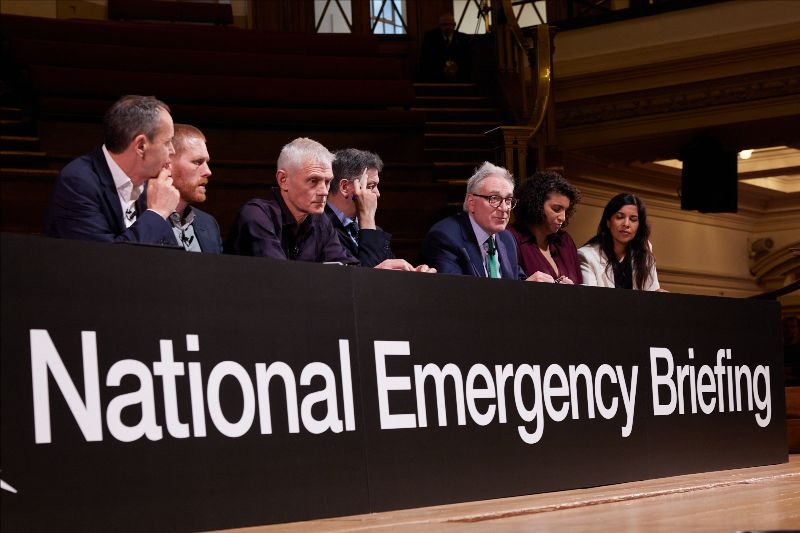
Image: NEB
In November, three CPA members attended the National Emergency Briefing on the climate and nature crisis in Central Hall in Westminster. Linda Aspey, CPA board member and climate psychology consultant to the NEB organising team, and co-chairs Kate Adams and Rebecca Nestor, were invited as representatives of CPA.
We have felt called to write this Climate Crisis Digest about our experience for two reasons. One is that we were very interested in our own and others’ psychological responses to the event, and thought other CPA members and followers might be similarly intrigued. The other is to invite a conversation within CPA about the role of climate psychology in this emergency. For those who want to take part in that conversation, there will be a Thinking Space* at 5 pm on 28 January, hosted by Linda, Kate and Rebecca.
So what is the National Emergency Climate and Nature Briefing?
This was a briefing from experts across nine fields, outlining how the climate and nature crisis is affecting aspects of life in the UK - from impacts of food insecurity, to losses of homes to flooding, health impacts, economic shocks and the cost of living and increased conflict.
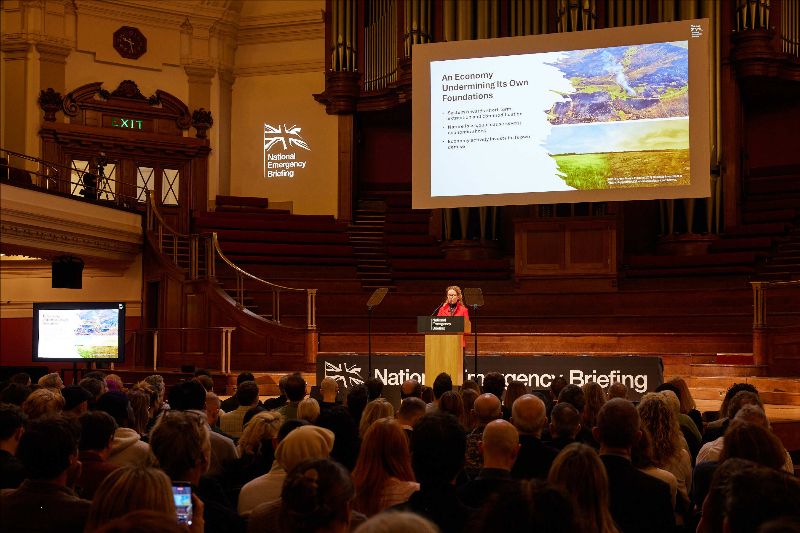
Nathalie Seddan Image: NEB
The briefing - organised by an independent company, not by politicians - was intended to replicate the Covid-19 briefings in the early days of the pandemic: authoritative, clear, truth-telling, unflinching about the seriousness of the collective challenge. It was aimed primarily at MPs and parliamentarians, and also at community and faith leaders, business, culture, sport and media people. The organisers sought to mobilise those in positions of power to take action.
The event opened with an impassioned talk by Chris Packham, and was chaired by Mike Berners-Lee, who brought in some short reflection breaks and gathered together the elements at the end. Each speaker outlined the key challenges and, importantly, key actions that leaders could take now. Many speakers included the societal, health, and economic benefits of action now for current and future generations, giving people a sense of valid agency in their talks.
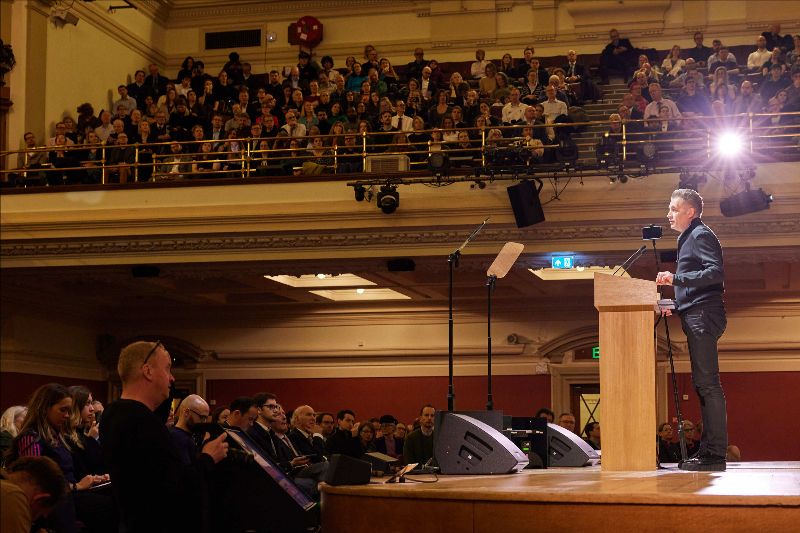
Chris Packham Image credit: NEB
A documentary is now being made based on the briefing, for screening in the UK’s 650 parliamentary constituencies in Spring 2026. Crucially, an open letter to the UK Prime Minister Keir Starmer and all the public broadcasters is calling on them to screen a public warning about the climate crisis.
‘We are in an emergency and it definitely felt like it’: emotional responses to the Briefing
We were moved by the organisers’ awareness of the emotional and psychological impacts of the briefing in the way the chairing was done; some of the speakers spoke about their fears for their children, some shared feeling terrified, frustrated and yet optimistic that together we could make a difference. Whilst being an evidence-led professional briefing, it felt human. We - and others we spoke to - hugely enjoyed the event. At the same time, we noticed some responses in ourselves and others that indicate the power of what we heard.
On the day, one of us felt like a small child with a parent in a crowded department store: a bit lost, anxious about the crowds, a sense of the grown-ups doing something mysterious. Another felt as if we were on a school trip: the excitement, the queue to get into the building, the chaotic buzzy conversations, the reuniting with friends - and perhaps the sense of someone taking charge. For some, conversations went on long into the afternoon in pubs and coffee shops where people gathered, reluctant to leave. Others - including two of us - found themselves desperate to leave.
Afterwards, we noticed quite distinct responses. For several days Kate found it very difficult to talk to others about the experience. Rebecca was very keen indeed to move things on, take the next step (‘write a Digest, involve CPA members!’). Over the weekend, just two days after the briefing, on social media and by email, people were asking ‘what can I do now?’ even though the organisers had spelled out the next steps and calls to action: to tell people about the event, share the letter widely, and drum up interest in the film.
We wondered about this sense of urgency, and whether the desire for immediate action is a way of protecting ourselves. We don’t think the urgency was just people being energised by the event, although they/we certainly were. Noticing our own responses, we could feel that they included an element of mania. Kate and Rebecca, reflecting in our shared supervision the following day, found ourselves playing with extreme language: images of violence, breakdown of social order, emerged and then developed into an unexpected playful exploration of how we might avoid "stabbing each other for the last cabbage". In that dark humour we also found we needed to acknowledge our 'slightly stabby' bits, the shadows which mean we can come to this as a whole self - and the terror that might be present in us, fuelling the enjoyment, the desperation to leave, the extreme language, the energy for next steps. We are in an emergency, and it definitely felt like it.
Processing the impacts: the role of climate psychology
Linda continues to work with the NEB organising team to bring a climate psychology lens as they explore how best to communicate the film, engage and care for audiences, organise and hold community screenings, and potentially work with partners like CPA to support the roll out of public briefings.
Meanwhile, we can read, sign and share the open letter, and if you wish to support the crowdfunder which will turn the briefing into a powerful public information film, you can do so here.
And we can start to think: what would CPA support for the community screenings look like? What understandings would it need to bring? There is potentially a role for CPA members and anyone working with emotional, psychological, spiritual practices to contribute. We’d therefore like to invite members to join us for a Thinking Space exploration of what this would look like.
Climate psychology is about offering attention to what is below the surface, processing the emotional and psychological responses we often prefer to disavow, and building communities and networks of support that mean we can face the difficult truths that keep coming at us.
This includes recognition of the darker or reactive parts of ourselves and exploring playfulness and pragmatism in the face of the challenges. What is it like to be where we are in all its messiness? What is it like to be briefed that we are in an emergency? And what is it like to stay with the emergency?
Notes
*Thinking Space is a monthly online event for CPA members where ideas can be processed and developed together - if you're interested in attending and are not a member find more about membership at the end of this email,
Authors' Bios
Kate Adams
Kate is a performance maker, facilitator, lecturer and co-chair for the Climate Psychology Alliance. She is interested in how we can draw on creative processes for sharing our experiences of the climate and ecological crisis, and how we can strengthen our relationship with the natural world. Kate is committed as a facilitator to developing co-creative spaces for people to explore new possibilities.
Rebecca Nestor
Rebecca is a researcher, lecturer, organisational consultant, and facilitator, focusing on offering support for those facing the climate and ecological crisis. Her professional work includes training and supervising facilitators of Climate Cafés, workshops on talking with friends and family about climate change, and talks and consultancy support for organisations where climate is part of the work. She is a long-standing board member of the Climate Psychology Alliance, and is currently co-chair with Kate Adams.
Linda Aspey
Linda is a coach, facilitator and psychotherapeutic counsellor who leads on CPA’s Climate Café Listening Circles and facilitator trainings, hosts the CPA Collapse Conversations group, and co-ordinates external climate psychology talks and workshops for CPA. She is also a writer, speaker and organisational consultant, supporting people and organisations to navigate turbulent times and build emotional understanding and collective resilience.