
Facing Evolving Difficult Truths
by Wendy Hollway

Photo: Muhammed Shaheer on Unsplash
“Don’t bother”.
I was part of a panel – the climate psychologist invited via CPA – to discuss three climate change films that were touring England. During the Q&A an audience member asked a question that went something like this: “I have a family member who’s avoiding climate change and won’t engage with me about it. What shall I do to convince them?”
I took the mic, “I’m going to say something heretical” I began, “don’t”. Even now, some months later, I feel the need to add, hastily, that I then carefully qualified this bald reply along the lines of “everyone is being affected by climate change now; it’s impossible to avoid. Find out what is worrying them. Listen. Start from there, don’t push, let go of the goal of getting them to accept the seriousness of climate change.” (I’ve thought a lot since then about what I did say and what I might have said, so this is probably a mixture of both the actual and the wished!)
Here I want to explain my thinking over the last few years about intervening in helping others “face difficult truths”. The Q&A “don’t” response encapsulates my feeling that the climate crisis has moved on profoundly in the last five years; that I am no longer persuaded by the idea that success will just take enough of us to be convinced of the truth, and therefore act. If I felt “heretical”, as I put it at the time of that Q&A, it must be because I felt I was crossing a CPA line in some way. But haven’t we got to stop this juggernaut, I hear a voice saying! An inner voice persists: “don’t bother” is not an ethical stance. How then should I act?
I think of all the different ways I’ve spoken (and not) with people - family and friends, neighbours, organisations and activism communities; negotiated how I talk, doing my best to be ethical in the particularity of each situation. What can someone bear at a given moment in their life? Is there an opening? It’s complex, how I handle my position of knowing many uncomfortable truths about the collapse of the Modern way of life on which we depend and from which we cannot extricate ourselves.
These challenges of everyday being with collapse coexist with my recognition that climate and ecological events and widespread political, economic and socio-cultural turbulence are not only more serious and multiple but more accessible to all through everyday media. This means that the CPA focus, on how people can bear and be supported in facing difficult truths, is of growing salience.
Framing the difficult truths
I tend to frame climate and ecological collapse in terms of the end of fossil fuel modernity [1] and a consequent wider systemic collapse [2]. The Modern era – broadly the last five hundred years – has been dependent on fossil fuels. Modernity’s form, (consumer capitalism, latterly global), its staggering technological advances (latterly artificial intelligence), and its ideological tenets (growth and progress) cannot survive without fossil fuels. I’m also interested in how Modernity has shaped individual selves in ways that must now change, a psychological lens that has a bearing on climate psychology. These changes aren’t primarily about giving up Modern comforts, rather about questioning the all-embracing consumer provision that almost everyone has learned to desire; about de-attaching happiness and satisfaction from that voracious and unfulfillable system of desire that is central to unsustainable ‘growth’.
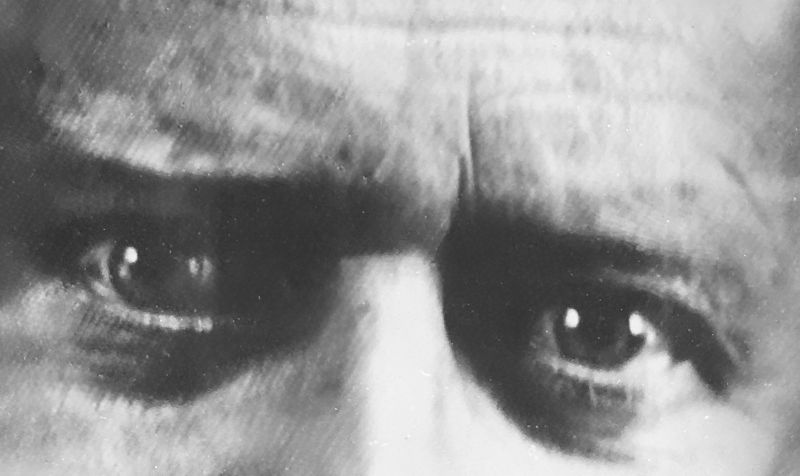
Photo: Wendy Hollway
Reframing individual responsibility
When encouraging people to face difficult truths – as the questioner was feeling obliged to try with her reluctant family member – it is hard to avoid placing the responsibility for turning around climate and ecological collapse on individuals. But this territory is snared! When I discovered that the idea of carbon footprint had been popularised by no lesser fossil-fuel giant than British Petroleum, a penny dropped. Aah! Blame individuals for consumerist consumption and Modern lifestyles! Pretend they are the ones who can turn around carbon emissions and global heating! Go on drilling because consumers demand it! Land individuals with the guilt! In climate psychology we call this the ‘responsibilisation’ of the individual. And I want us not to collude in it when we extend support to the multitudes of distressed and anxious people now finding it impossible to ignore the surrounding turbulence and threat in most aspects of their lives.
Guilt and acceptance
Responsibilisation exacerbates the guilty feelings accompanying the idea of each person’s responsibility for climate and ecological damage via the carbon footprint. It is impossible to avoid committing climate and ecological “sins” (note the heavy scare quotes) just by living, however greenly, within Modernity, at this time in world history. I see the way people’s lives need a helping of disavowal, need to keep on carrying on in the same vein because they have little or no room for manoeuvre. I know what it’s like.
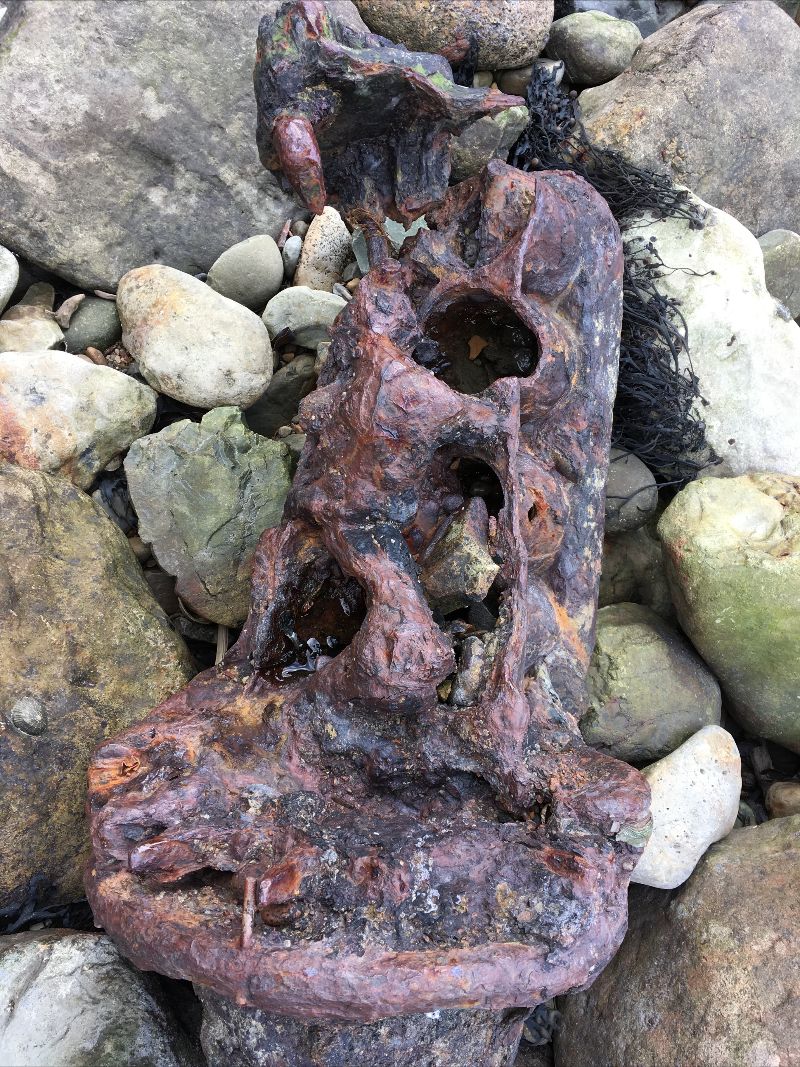
Photo: Wendy Hollway
Everything is collapsing, it’s systemic
Community support can help a lot. Climate cafes are central to CPA’s outreach work and by all accounts they help participants feel supported in bearing current difficulty and knowledge about the collapsing future [3]. They are framed around climate change, which means they tend to attract a particular segment of the population. My ‘end of fossil-fuel Modernity’ frame suggests a wider range of possible starting points (although climate and ecological collapse will always feature in the conversations).
If we just take the UK, there are widespread issues usually treated as separate from climate change. It might be school avoidance since lockdowns, long covid, high food prices, getting a SEN statement for a child on the autistic spectrum or with ADHD, the closure of the last local industry with the loss of hundreds of jobs, waiting lists for a hip or knee replacement or cancer treatment, the cost of child and elder care, asthma, mortgage rates, misogyny, small boat crossings, reduction in PIP, collapse of job openings because of AI, unaffordability of housing. In addition to the more obvious damage from flooding and heatwaves, coastal erosion and food scarcity, to me, these are all expressions of systemic collapse at the end of fossil-fuelled Modernity. People’s experience of existential uncertainty and fear doesn’t come in a compartment labelled ‘climate change’, it is indivisible.
CPA’s evolving frames
There’s so much to bother about! When CPA started, talk about the climate was rare. Climate scientists encountered walls of silencing, a suppression of knowledge we now know was orchestrated by fossil fuel interests and their billions. Facing difficult truths meant bringing climate change into the open (it was one of XR’s primary demands too). Now the cat is out of the bag, the issue is the effects of collapse on lives, starting from what people bring, and how support can best be extended to different communities (for example as in CPA’s youth support programme). It was from a changed frame that I found myself replying to the audience member’s question. What changing frames does CPA adopt and how do we arrive at them?
[1] Reading Bruno Latour’s Down to Earth: Politics in the New Climatic Regime (2018. Polity Press) opened my eyes to this version of events.
[2] On collapse, I recommend How Everything Can Collapse. by Pablo Servigne and Raphael Stevens. 2020. Polity Press. In its initial French version, published in 2015, the subtitle translates as ‘a little manual of collapsology for present generations’.
[3] For example, Calabria, L. & Marks, E. 2024. What happens in Climate Cafés? Exploring responses to the psychological burdens of climate change in seven UK women. The Cognitive Behaviour Therapist, 17, e33.
And/or Cooper, M. E., Cunsolo, A., Aylward, B., Yamamoto, S. S. & Harper, S. L. 2025. “Feeling your emotions is an act of rebellion”: How climate cafés across Canada support youth wellbeing during the climate crisis. Social Science & Medicine, 376, 118002.
Author's Bio
Wendy Hollway is editor of the Climate Crisis Digest. She co-authored the book Climate Psychology: A Matter of Life and Death with fellow CPA members Paul Hoggett, Chris Robertson and Sally Weintrobe.