
Death, Coloniality/Modernity and the Climate and Ecological Emergency by Jane Ribbens McCarthy
'We are the not-so-slow
suicide of the world.'
~ Ben Okri, 2023
On course for self-destruction?
The Climate and Ecological Emergency (CEE) is an existential threat. Humankind has never before gone so far in exhibiting the capacity to destroy all life on earth. But it’s misleading to call this era the Anthropocene, because this destruction is created by an affluent privileged minority of humans, while its effects fall most heavily on people living precariously in majority worlds who have, as Foluke Taylor says, experienced the endings of their worlds over and over again in a history that continues – and rapidly accelerates - to this day. (Hamilton et al, 2025).
Yet the affluence of the minority worlds, as many writers have argued, is based in the same self-destructive coloniality/ modernity that has led to the CEE itself. As Vanessa Machado de Oliveira explores in detail, drawing on her indigenous heritage, colonialism and modernity are inextricably bound up together, in a complex and deeply rooted historical and contemporary nexus. Further, she writes how …modernity emerged as an attempt to control change, and resist and defeat death (2021:189), with key implications for facing existential threat. Here I want to talk about death as the ultimate challenge to the narratives and structures of this coloniality/modernity.
Does my personal and family heritage, shaped by coloniality/modernity, offer any fertile ground for responding to existential threat? I am a white English woman, a retired sociologist, from a long generational line of rural labourers who eventually came to enjoy the benefits of a country (now called the United Kingdom) that perpetrated the most widespread colonial empire in history.
Death and coloniality/modernity
‘Modernity’ is a term that is generally used to refer to changes that emerged historically in Western Europe, with the major social structural and political processes associated with industrialisation and urbanisation.
These changes progressively loosened social solidarity and centralised the liberty of ‘the individual’ and their ‘interior experience’. Sometimes also referred to as the Ages of Reason and of Enlightenment (17th and 18th century), what became culturally articulated, according to Tony Walter, was faith in rationality, science, expertise, progress, the future, and the young, all of which are clearly reflected in twentieth century grief psychology (2007:126). But behind this (arrogant? privileged?) worldview of ‘progress’ and ‘civilisation’ lay pervasive processes of ‘othering’, associated with colonialism, racism, oppression, extraction and exploitation. Coloniality/modernity is thus rooted in power and control, bound up with historically embedded institutions and systems, and experienced through particular ways of living and being in the world, creating a nexus which seems to have an independent life and power of its own.
The American psychiatrist and anthropologist Arthur Kleinman encapsulates the associated psychosocial processes thus: It is our assiduous denial of existential vulnerability and limits that is extraordinary…. It is as if modernity itself were predicated on fostering this fiction, a falsehood at the centre of global culture… (2006:7).
Death denial?
For me, beyond developing my sociological imagination in relation to my white English heritage of doing death (Golding et al, 2024), a helpful step has been participation in the Climate Psychology Alliance, particularly its decolonising group. I’ve found myself engaging with creative processes of readings, associations, fantasies, and waking up from Whiteness through shared dreaming.
Recently I was engaged by a discussion on the CPA google email thread arising in response to an article by George Monbiot proposing the possibility of ‘vengeful nihilism’ as a key driver of the catastrophically destructive (suicidal?) politics we see emerging, particularly in the USA and among international elites. In the course of this conversation, Paul Hoggett offered this amazing quote from Peter Thiel, the billionaire PayPal founder, apparently taking ‘death denial’ to new levels by suggesting that human embodied mortality is an ‘ideology’: I stand against confiscatory taxes, totalitarian collectives, and the ideology of the inevitability of the death of every individual. (Quoted by Lawler).
These words suggest an extraordinary belief in the narrative of coloniality/modernity with its promise of technology as a means to control and overcome nature or natural processes – even death – for the benefit of ‘human’ priorities. As Lawler comments in regard to to Thiel’s hyper-libertarianism: The extinction of the “I” is unacceptable, and a free being can regard death with optimism, as yet another problem to be solved.
Similarly, one dominant response to the polycrisis focuses on technology’s ability to mitigate and control the life threatening manifestations of the CEE. But, as Paul Hawken has recently argued, it is not carbon that is ‘the enemy’, it’s (some) people that are the problem. Yet, paradoxically, alongside Thiel’s fantastical claim, in this era dominated by the narrative of control of white coloniality/modernity, the ‘knowledge’ of death and its aftermath is shaped by an individualistic worldview in which death does indeed present the ultimate challenge that cannot be resolved. Indeed, it may take a paradigm shift, away from the language of ‘grief’ and towards a much broader lens for understanding ‘death and its aftermath’, to begin to decentre the individualised and psychologised mindset that predominates in coloniality/modernity (Ribbens McCarthy et al, 2023). As Darcia Narvaez explains:
Western civilization shaped culture to primarily value the conscious thinking mind – left-brain hemisphere dominance, oriented to categorizing and controlling static things while detached from relational atunement…. [which] will make death seem like ‘the end’ rather than a transition to a new beginning. (2022, 47-8)
Decolonising death
This draws attention directly to the roots of the polycrisis of ‘Western civilization’, a form of coloniality/modernity bound up with racialised capitalism and exploitation, not just of human Others but of all life and ‘resources’ of our Mother Earth. Recognising – decentring, liberating - this historic and contemporary situation requires a decolonising lens that breaks out of the preoccupations of coloniality/modernity with categorising, measuring and controlling ‘Others’, to develop instead a radical openness to ways of being from ‘elsewhere’, often embedded in spirituality and a deeply connected relationality. Such decolonising approaches to social and racial justice require going beyond universality to embrace pluriversality (Mignolo, 2018) - of ‘knowledge’, ways of knowing, ‘realities’ and cosmologies. This work is not an optional add-on to the CEE but a central core, most particularly the existential threats of multiple forms of endings and annihilation.
In sketching the outline of these arguments, then, I’m suggesting that a focus on decolonising death and its aftermath - with all the tensions this involves - is a core significant endeavour for addressing the polycrisis, requiring multiple lenses. And a key aspect for decolonising work is the need to understand the depth and breadth of coloniality/modernity, its fantastic allure, and its associated invisible Whiteness (to varying degrees around the world), as it manifests in the ‘left hemisphere culture of Modernity’, and reaches into our souls, our thinking, our hearts, our very being, and embedded as it is in the institutions, systems and processes of globalised socio-political power.
How does this connect with the vengeful nihilism described by Monbiot? Paul Hoggett, on the Google CPA discussion platform, suggested that it might be understood as a manifestation of envy, which arises when the experience of dependence threatens to break in upon our narcissism… [which] is what the climate crisis is doing, reminding us of our dependence upon this life-giving source (nature). This insight can be extended, reminding us that ‘humans’ are embodied, a part of ‘nature’, not separate, which means our particular embodied form dies like other living things die. And within dominant narratives of coloniality/modernity, humans’ embodied mortality means there is no possibility to transcend death. While those such as Thiel may cling to the idea that death is a problem to be solved, not inevitable, beyond coloniality/modernity lie wisdoms and experiences from ‘elsewhere’.
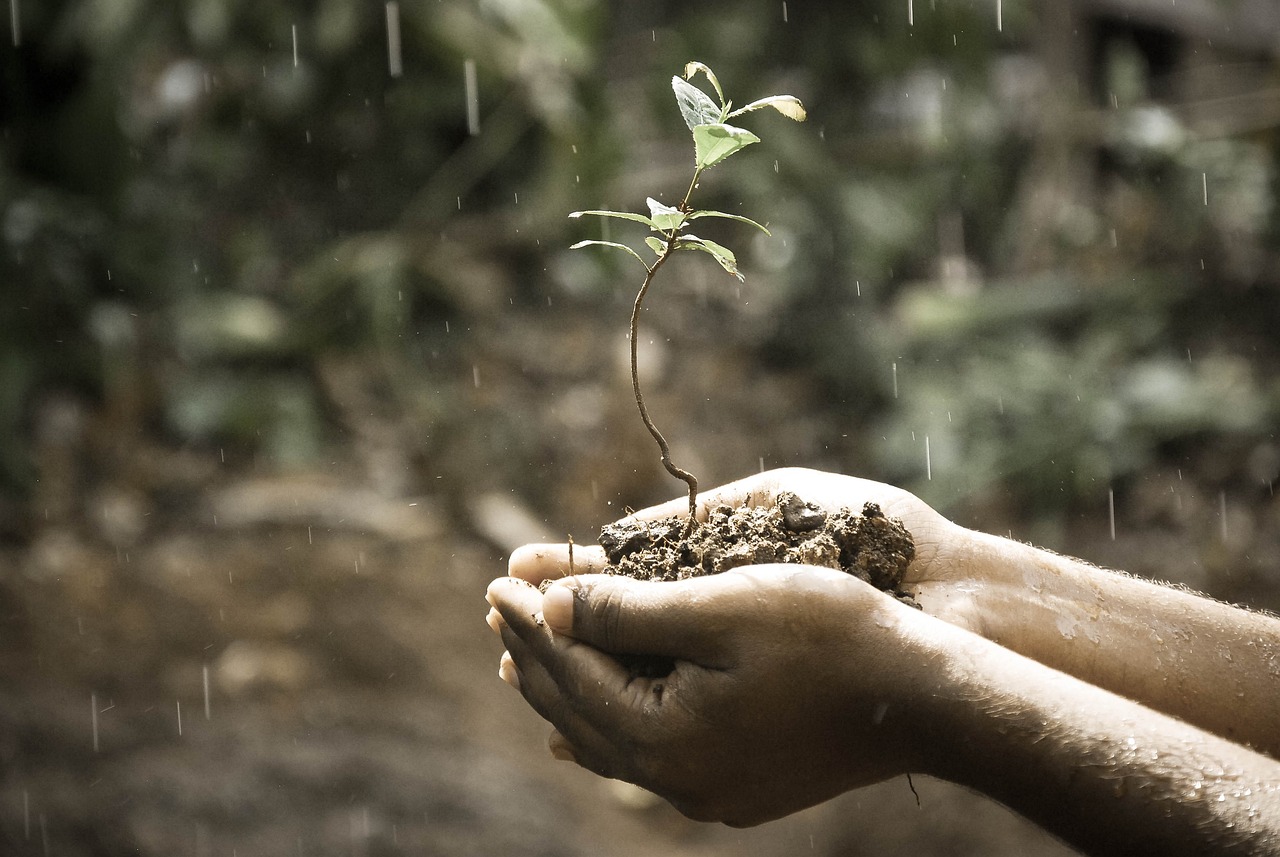
Nourishing the soil for facing existential threat
Perhaps by approaching the CEE with eyes that can see beyond the fear wrought by the threat of existential annihilation, ‘we’ in affluent minority worlds might begin to decentre/overturn the worldview and power structures of coloniality/modernity to find approaches to survival - both embodied and spiritual. Here are two directions:
Mourning… holds potential for expanding climate change discourse in politically and ethically productive ways… Mourning can be a catalyst for political action between, among, and across species. (Cunsolo Willox, 2022, pp 137 and 160)
The ability to imagine what we dread most is an evolutionary tool that nature has given us to transcend what we fear. I do not believe that imagining the worst makes it happen. Imagining the worst might be one of the factors that makes us prevent it from happening. (Okri, 2023)
Today (as I was writing) I heard a British doctor, Tom Potoka, speaking on the radio, while working in the midst of the catastrophic devastation occurring in Gaza. He was asked if he was afraid, following major bombing hours earlier that same day of the hospital where he was working. He responded in words that are almost unthinkable in the Whiteness of English individualism, where death and its aftermath is psychologised, internalised, privatised and medicalised. Yet he did. His comment is rooted in connection beyond his ‘individual self’, with a sense of being-ness bound up with others: No, I’m not nervous, we have colleagues here, there’s patients here, there’s a job to be done, and the risks are shared by everybody here.
References
Cunsolo Willox A. (2012) ‘Climate change as the work of mourning’. Ethics and the Environment 17(2) 138-165.
Golding B., Hamilton, S. and Ribbens McCarthy, J. (2025) ‘Complex worlds, complex people: Auto-ethnographic conversations on decolonising the aftermath of death’. In S. Mallon and L. Towers (eds) Death, Dying and Bereavement: New Sociological Perspectives, London: Routledge. (Pp159-171)
Hamilton S., Keenan, J., Pusey, L., Ribbens McCarthy, J., Stedmon, J., and Taylor, F. ‘Decolonising the aftermath of death in UK contexts: theoretical approaches, institutional “constraints”, and everyday experiences’, Mortality, 30(2) 466-488.
Kleinman A. (2006) What Really Matters: Living a Moral Life Amidst Uncertainty and Danger. Oxford University Press.
Machado de Oliveira, V. (2021) Hospicing Modernity: Facing humanity’s wrongs and the implications for social activism. North Atlantic Books.
Mignolo W. D. (2018). ‘Foreword: On pluriversality and multipolarity’. In B. Reiter (Ed.) Pluriverse: The geopolitics of knowledge. Duke University Press. (pp. ix–kvi).
Narvaez D. (2022) Understanding/embracing death and dying. In W. Topa and D. Narvaez (Eds.) Restoring the Kinship Worldview: Indigenous voices. North Atlantic Books.
Okri B. (2023) Tiger Work: Stories, essays and poems about climate change. Head of Zeus.
Potoka T. World at One, BBC radio 4, 14/05/2025
Ribbens McCarthy J., Woodthorpe, K.and Almack, K. (2023) ‘The aftermath of death in the continuing lives of the living: Extending ‘bereavement’ paradigms through “family” and relational perspectives.’ Sociology. (Early access) https://doi.org/10.1177/00380385221142490
Walter T. (2007) ‘Modern grief, postmodern grief’, International Review of Sociology, 17(1) 123-134.
Author's Bio
Jane McCarthy is an Honorary Associate at The Open University in the Department of Social Policy and Criminology; a Visiting Professor at the Centre for Death and Society at Bath University; and a Visiting Fellow at the University of Reading. She is a participant in the Climate Psychology Alliance. Her work is rooted in family and relational sociology over many decades, including work on ‘family troubles’ and on childhood bereavement. At the Open University she initiated the Open Societal Challenge on Existential Dis/Connections; this now forms the core of her interests, and she has recently published several collaborative pieces about decolonising death and its aftermath. Jane.McCarthy@open.ac.uk