


Research and resources, shaped by those doing the work

Dark woodland in evening light
Unfurling fern frond

We're a community of researchers, practitioners, and thinkers committed to disseminating climate psychology widely, not just within our own professional circles. Through our flagship journal Explorations in Climate Psychology, our podcasts and talks, our library, and the contributions of members from across the world, we work to build a shared understanding of how psychology can meet this moment.

Explorations in Climate Psychology - the CPA journal

Navigating the inner and external work (relational and socio-political) that this moment calls on us to do, Explorations in Climate Psychology is CPA's flagship journal, published annually. We aim to be inclusive of the different ways people experience and engage with the climate and ecological crisis and welcome a wide range of forms: peer-reviewed research, analytical articles, reviews, interviews, reflections, testimonies, poetry, art, and lightly edited conversations.

Edited by CPA's Explorations Group, the journal explores current and emerging themes in the field, from climate grief and trauma to colonialism, decolonisation, the limits of Western rationality, and what it means to "stay with the trouble." The current editors of Explorations are noted in the latest issue.
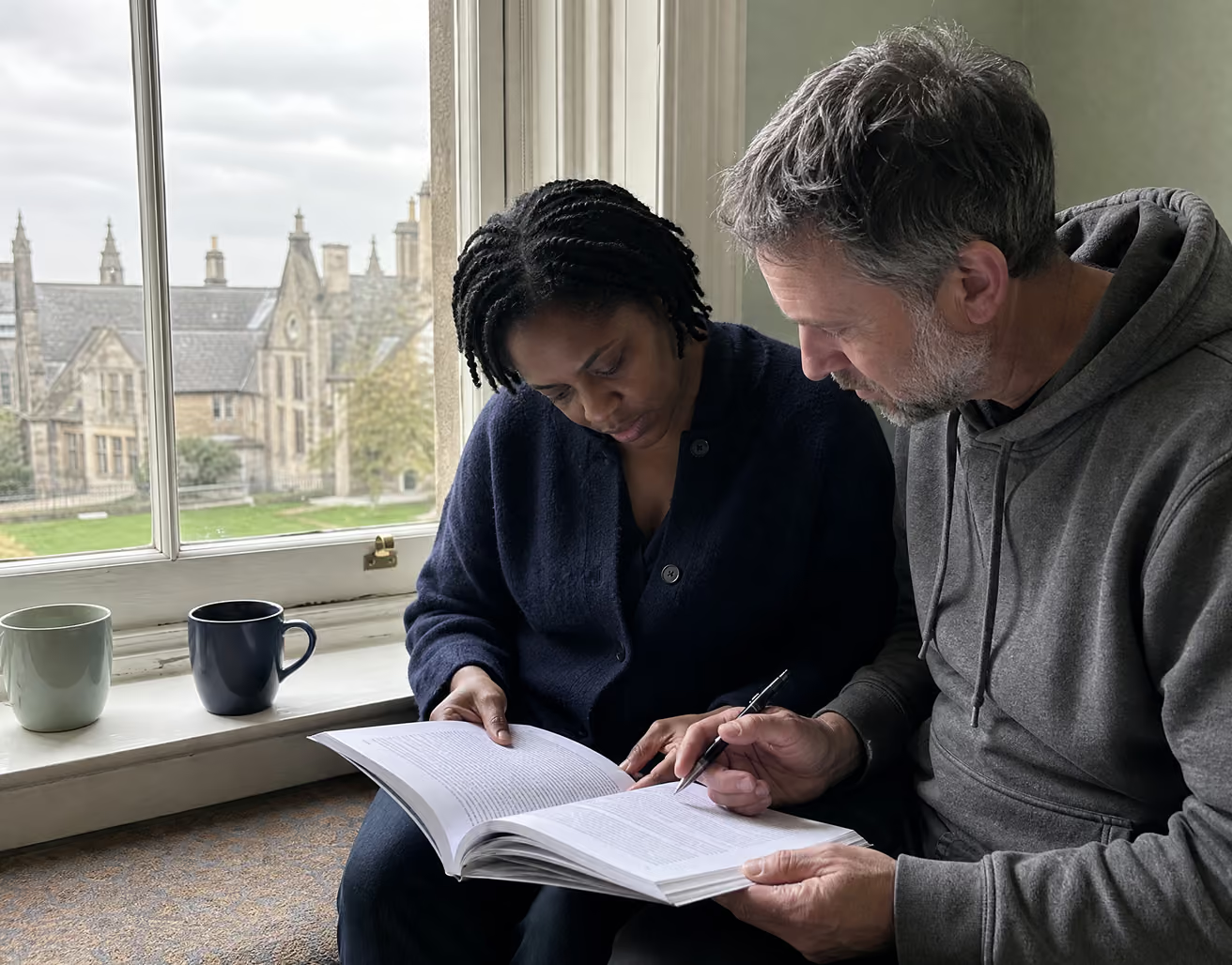

Two people reading an issue of the Explorations in Climate Psychology journal together
Three people researching together at a table with laptops and notes

We welcome contributions from inside and outside the CPA Community.

Find the latest call out here and guidelines for contributions here. The journal is open access and contributions can be used and quoted as long as they are referenced.

The Explorations group also offers online events with authors and other leading voices, which explore journal topics further.

See what's coming up

If you are interested in joining the editorial team (we particularly welcome young people and those of the Global Majority), or wish to get in touch for another reason you can email them here.

Explorations: A journal of Climate Psychology

A biannual publication from CPA's editorial working group, tracking the pace, rhythms and voices of climate psychology as the field emerges. Contributions are welcome from practitioners, researchers, artists and activists alike.

What's in the journal

Explorations makes space for essays, interviews, testimonies, poetry and art alongside peer-reviewed research — different ways of expressing and engaging with the climate and ecological crisis, gathered from contributors across the UK and beyond.

Latest issue: Heavy weather: Exploring reactionary states of mind

Issue 8, Heavy Weather, is out now. Inside: explorations of the post-truth world, group narcissism, the unconscious, AI and power, and how each feeds the reactionary state of mind.

We also publish pieces from our journal via our Substack account. You can connect with us there, just follow @climatepsychologyexplorations on Substack.

New to Climate Psychology? Start here

Climate psychology is a young field with deep roots. If you're new to it, the resources below are good places to begin: foundational guides, podcasts and videos, defining texts, and the essential reading that practitioners and researchers return to again and again.

Hands resting on a book beside a mug and reading glasses
Three people in discussion around a coffee table

The Handbook of Climate Psychology

CPA's foundational guide to the field, freely available to download. The handbook introduces the key concepts, frameworks, and questions that shape climate psychology, and is used widely as an entry point for practitioners, researchers, and the curious.

Free Open University course

Introducing Climate Psychology: facing the climate crisis

The course explores ideas from social theory, psychoanalysis, ecopsychology, eco-feminism and post-humanism to gain a deeper understanding of the climate and ecological crisis, its impact on our wellbeing and how to build psychological resilience. The course is endorsed and supported by the CPA.

Climate Crisis Conversations

Our podcasts offers an accessible, conversational entry point into climate psychology, featuring CPA practitioners, researchers, and friends in dialogue about the climate and biodiversity crisis and the full range of emotional responses to it.

From Anxiety to Agency: stepping up, rather than shutting down, in the face of the climate change crisis

Rebellion is for Life, not just Extinction; focussing on regenerative culture

What our members are sharing

Climate psychology is built collaboratively, by members for members and beyond. The work below reflects what people across our community are thinking about, researching, writing, and making right now. These are member contributions, not CPA publications, voices from across the alliance.

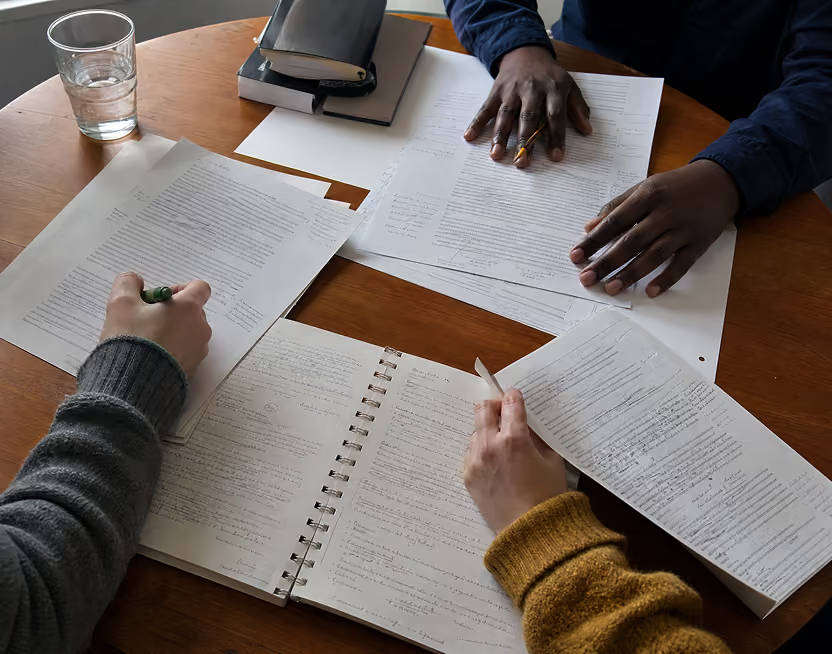
CPA members sharing handwritten notes around a table

Eco-somatics and Collective Imagination – Broadening Perspectives for Climate Transition Discourse

By Frederike Doffin — "I have been exploring how eco-somatics and collective imagination add different layers to the discourse on climate change and broaden perspectives by contributing through sensory approaches and body-based knowledge. I felt the need to complement predominant discourses on climate transition with practices that are situated in the body, in co-creativity with plants and which have the capacity to embrace subtle realms of more-than-human life forces..."

Facing Our Climate Reality: Honest Briefings That Spark Community Action and Resilience

By Nick Drew — Nick Drew, from the Climate Psychology Alliance and a long-standing member of the Emergencies Partnership (EP) Mental Health Network, has written a powerful blog as a stark (but also hopeful) reminder that the UK is already living in a climate crisis, with record-breaking heat and rising risks becoming the new normal. Nick highlights urgent warnings from national reports, the surge of community screenings of the People’s Emergency Briefing film and the growing need for collective resilience. Nick’s message is clear: we must turn awareness into community‑level action because investing in preparedness now saves lives later but, thankfully, there are passionate and capable people who are feeling more capable and motivated to act (and that can grow).

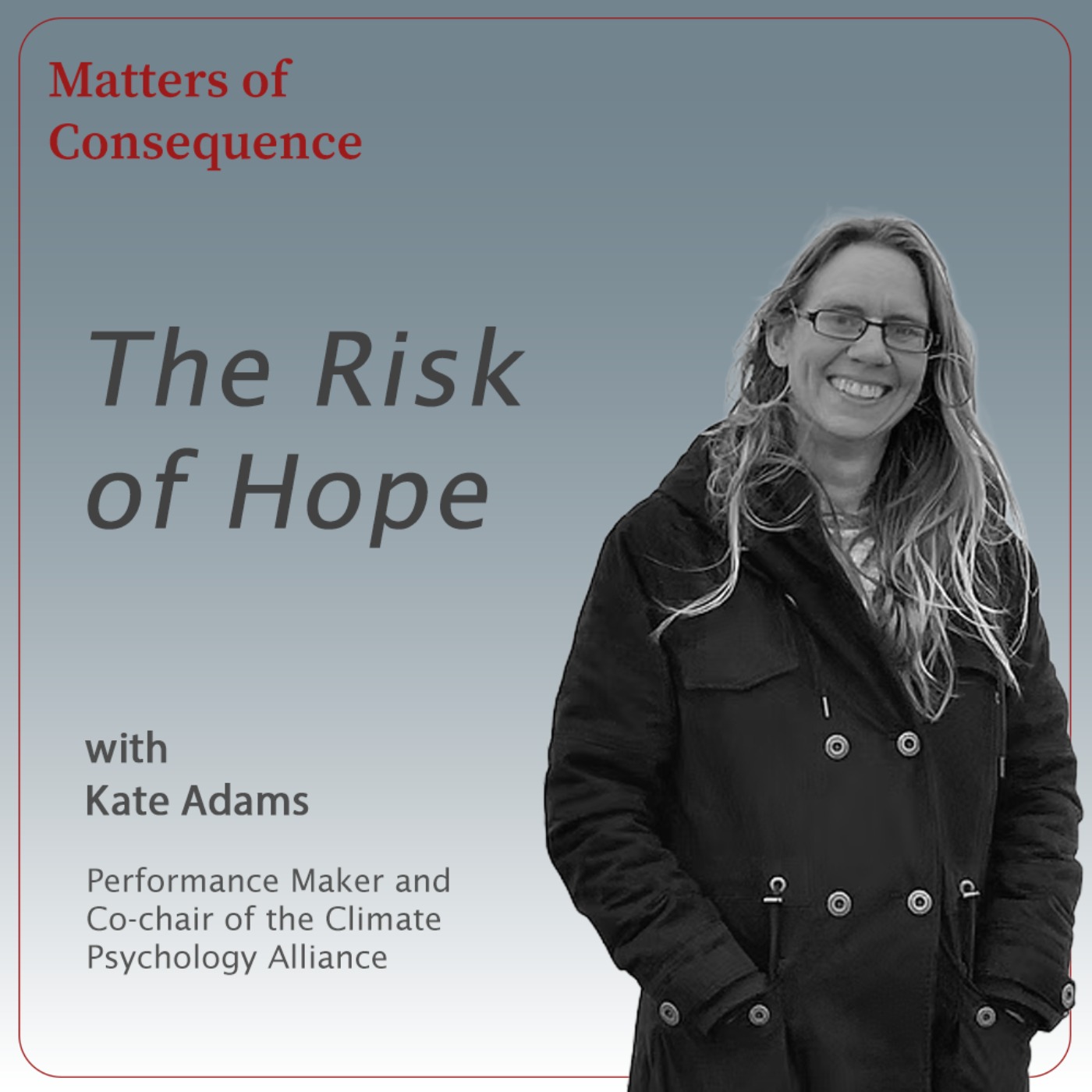
The Risk of Hope Matters of Consequence: Meaningful Conversations for Curious People

What happens when the emotional weight of the climate crisis feels too heavy to carry? In this deeply personal conversation Kate Adams, a performance maker, lecturer, and former co-chair of the Climate Psychology Alliance takes us inside the unseen world of eco-emotions and artistic resilience. The episode explores the systemic importance of vulnerability, the tension between grief and hope, and the quiet work of creating spaces where people can confront the emotional toll of the climate crisis without judgment.

Wet garden path through lush greenery

The Climate Crisis Digest is our monthly publication, usually a short piece written by members.

The name Digest reflects the psychoanalyst Wilfred Bion's insight that experience needs to be digested in order to be thinkable, especially when it is hard to bear (hence CPA's approach to difficult truths). The Digest style is not academic or polemical, more journalistic and exploratory in tone. That requires reflection by the author, to invite reflection in readers. Reflection here means inquiring into our emotional experience so as to more fully engage with the meaning of what is written.

The Digest is edited by Thulsi Prabakaran.

Go to recent Digest articles
Subscribe to our newsletter for the monthly Climate Crisis Digest plus CPA news
Subscribe to the Digest

Subscribe to the Digest

* indicates required
Are you joining as a student or young person?
This is so we can contact you with relevant information

Would you like to receive communications from CPA?

You can decide to stop receiving emails from us at any time by clicking the 'unsubscribe' link in the footer of any email you receive from us, or by contacting us at admin@climatepsychologyalliance.org. We will treat your information with respect. For more information about our privacy practices please visit our website.

We use Mailchimp as our marketing platform. By clicking below to subscribe, you acknowledge that your information will be transferred to Mailchimp for processing. Learn more about Mailchimp's privacy practices.

Library

Our library is a collection of open-access research and resources, written or recommended by CPA members.

Displaying
1
of
1
articles
Thank you! Your submission has been received!
Oops! Something went wrong while submitting the form.
Hope & resilience
Climate and ecological emotions

Radical hope in the time of climate crisis

As ice melts, bushfires, heatwaves and cyclones intensify, many grapple with the question of "what kind of hope, if any, can I hold as climate catastrophe deepens?" To answer this question, we need to not only accept the realities of worsening climate destructions, but also re-examine the nature and agency of hope in the face of existential crisis.

2020
Articles & reflections
Radical hope in the time of climate crisis
Gillespie
2020
Climate and ecological emotions
Activism & collective action

Energising Climate Conversations

Good climate reporting informs us about the complex consequences of a heating planet. In order to also act as a catalyst for change, climate campaigners need to acknowledge the complex emotional responses their stories stir while highlighting avenues for personal and collective action.

2020
Articles & reflections
Energising Climate Conversations
Gillespie
2020
Climate justice & decolonising
Hope & resilience
Nature connection

Facing the limit of resilience: perceptions of climate change among reindeer herding Sami in Sweden

This study explores how reindeer-herding Sami communities in Sweden perceive and experience the limits of resilience in the face of climate change. Drawing on qualitative interviews, the authors examine how shifting weather patterns, unpredictable snow and ice conditions, and changing vegetation are affecting traditional reindeer husbandry practices that are central to Sami livelihood, culture and identity. Participants describe a sense of encroaching limits to their capacity to adapt, as traditional ecological knowledge built up over generations becomes less reliable in the face of rapidly shifting conditions. The study situates these experiences within a broader discussion of resilience as a concept, questioning whether it can be usefully applied to communities facing climate impacts that may exceed adaptive capacity altogether, and calls for greater attention to Indigenous perspectives on climate resilience and its limits within climate policy and research.

2011
Research papers
Furberg, M.
Evengard, B.
Nilsson, M.
Facing the limit of resilience: perceptions of climate change among reindeer herding Sami in Sweden
Furberg
2011
Climate and ecological emotions
Theory and frameworks
Activism & collective action

Extreme weather, climate change, climate action and uncertainty distress

Background: Both extreme weather and climate change have been linked to distress and at times mental health problems. Pro-environmental actions have often been related to higher distress. The uncertainty distress model proposes that in real-world situations, perceptions of threat and uncertainty contribute to distress.

2024
Research papers
Extreme weather, climate change, climate action and uncertainty distress
Freeston
2024
Therapeutic perspectives
Climate justice & decolonising
Theory and frameworks

Deep Democracy: World Out There - World in Here

Climate and ecological breakdown are structured by dynamics of power and discrimination. Like other forms of structural discrimination, these dynamics operate on every scale, from the global and collective, to the interpersonal and relational. This chapter explores how the therapeutic process may include explicit exploration of these different levels and their relationship with each other, in the wholeness of the client, the therapist and our world. It introduces the concept of 'deep democracy', whereby all parts of a given 'field' or process have something that is needed for the whole, including the very part of the system we are most in conflict with.

2024
Books & chapters
Deep Democracy: World Out There - World in Here
Fredenburgh
2024
Activism & collective action

Why we need to build a planetary sense of community

The aim of this position paper is to argue that after COVID-19, we have a terrific opportunity to develop a planetary sense of community to confront systemic problems such as climate change, racism, sexism, socioeconomic and power disparities. This tangle of different crises is making both the earth and us human sick and spreading huge amounts of physical, psychological and political pain. Only if we all become more aware of the interconnections between the crisis each of us prioritizes, and all the others, then we have a better chance to begin to develop a planetary sense of community.

2020
Research papers
Why we need to build a planetary sense of community
Francescato
2020
Youth & intergenerational
Hope & resilience
Activism & collective action

The Resilience Project

Youth-driven organisation set up in 2020 offering peer-support Resilience Circles, an annual Resilience Fellowship, and workshops grounded in climate psychology, helping young climate activists build emotional resilience and avoid burnout.

Organisations & networks
Katie Hodgetts
The Resilience Project
Hodgetts
Youth & intergenerational
Climate justice & decolonising
Climate and ecological emotions
Activism & collective action

SustyVibes

Nigerian youth-led sustainability organisation using art, pop culture and grassroots advocacy to make climate action relatable across Africa. Its Eco-Anxiety in Africa Project (TEAP) validates and researches African experiences of eco-anxiety and environmental-related emotions.

Organisations & networks
Jennifer Olachi Uchendu
SustyVibes
Uchendu
Youth & intergenerational
Climate and ecological emotions
Activism & collective action

Force of Nature

Youth non-profit mobilising mindsets for climate action, helping young people turn climate/eco-anxiety into agency through workshops, 'climate cafes' and training pathways, and working with leaders across business, education and policy to drive intergenerational solutions.

Organisations & networks
Clover Hogan
Force of Nature
Hogan
Climate justice & decolonising

Communities reclaiming power and social justice in the face of climate change

As the climate crisis accelerates and disproportionately affects marginalised communities and countries in the global South, the need for power and social justice approaches is particularly important. Community psychology, with a long interest in the impacts of power discrepancies on the well-being of groups and communities, can offer theoretical and practical tools for addressing climate change and environmental problems without reproducing or intensifying existing inequalities and injustices. This special issue looks at communities' struggles for climate and environmental justice by focusing on how they resist, contest and overcome power inequalities. Most contributions come from high climate vulnerable countries and regions in the global South.

2020
Research papers
Communities reclaiming power and social justice in the face of climate change
Fernandes-Jesus
2020
Theory and frameworks
Nature connection
Climate justice & decolonising

'This energy is clean, but here, on the dunes, it would be dirty'

This study was conducted in the town of Galinhos, RN, Brazil, and aimed to analyze the opposition to the implementation of the Rei dos Ventos I wind farm in 2012, taking into account the meanings and attachment to place. Methodologically, an ethnographic approach was carried out, supported by historical-dialectic materialism, with records in diaries and field notes, in addition to 23 interviews with residents. The research found that the relationship with nature conforms a knowledge central to local life, and that the energy transition must come accompanied by a broader social shift.

2020
Research papers
This energy is clean, but here, on the dunes, it would be dirty'
Farias
2020
Climate and ecological emotions
Policy
Theory and frameworks

The Impact of Climate Change on Mental Health and Emotional Wellbeing: A Narrative Review of Current Evidence, and its Implications

This is the expanded, peer-reviewed academic version of the authors' Grantham Institute briefing paper, providing a comprehensive narrative review of the multiple pathways through which climate change interacts with mental health and wellbeing. Drawing on literature across relevant disciplines, the paper summarises converging global evidence on the mental health consequences of climate change and considers implications for clinical practice, research priorities and policy. As the fuller academic treatment alongside the more accessible briefing paper, it offers a detailed evidence base for readers wanting the full literature review underlying the policy recommendations.

2022
Research papers
Emma L. Lawrance
Rhiannon Thompson
Gianluca Fontana
Neil Jennings
The Impact of Climate Change on Mental Health and Emotional Wellbeing: A Narrative Review of Current Evidence, and its Implications
Lawrance
2022
Climate and ecological emotions
Policy

The impact of climate change on mental health and emotional wellbeing: current evidence and implications for policy and practice

Produced by Imperial College London's Grantham Institute and Institute of Global Health Innovation, this briefing paper sets out the current evidence on how climate change is affecting mental health and emotional wellbeing worldwide, distinguishing direct effects (such as those following extreme weather events) from indirect impacts on the social and economic factors that support wellbeing, including food security and housing quality. The paper proposes a detailed set of recommendations for policy makers, research institutions, mental health practitioners and health systems, calling for interdisciplinary research, recognition of the mental health co-benefits of climate action, and equitable access to protective factors such as nature and energy-efficient housing.

2021
Research papers
Emma L. Lawrance
Rhiannon Thompson
Gianluca Fontana
Neil Jennings
The impact of climate change on mental health and emotional wellbeing: current evidence and implications for policy and practice
Lawrance
2021
Theory and frameworks
Denial & avoidance
Hope & resilience

Deep Adaptation: Navigating the Realities of Climate Chaos

‘Deep adaptation’ refers to the personal and collective changes that might help us to prepare for – and live with – a climate-influenced breakdown or collapse of our societies. It is a framework for responding to the terrifying realization of increasing disruption by committing ourselves to reducing suffering while saving more of society and the natural world. Edited by the originator of the concept of deep adaptation, Jem Bendell, and a leading climate activist and strategist, Rupert Read, this book is the essential introduction to the concept, practice and emerging global movement of Deep Adaptation to climate chaos.

2021
Books & chapters
Jem Bendell
Rupert Read
Deep Adaptation: Navigating the Realities of Climate Chaos
Bendell
2021
Youth & intergenerational
Climate and ecological emotions
Parenting

Climate Psychology Education Resources

Free resources from Educational Psychologist and CPA member Dr Louise Edgington, supporting educators and parents in addressing climate anxiety and emotional wellbeing in education settings.

Tools & guides
Louise Edgington
Climate Psychology Education Resources
Edgington
Youth & intergenerational
Climate and ecological emotions
Policy

'Not about us without us' - the feelings and hopes of climate-concerned young people around the world

The feelings and hopes of young people around the world are often neglected in policymaking and research, with consequences for both their wellbeing and the effectiveness of humanity’s response to the climate crisis. Many of them are distressed by climate change’s impacts, the inaction of political and corporate leaders, the ways other people respond to their feelings, and the lack of support they have to share their feelings or get involved in meaningful climate-related work. This paper is written by a group of twenty-three concerned young people from fifteen countries. It provides a first-hand account of our deepest feelings, how these feelings affect our daily lives, the support we want to help us cope, and our hopes for a radically more compassionate future. The results are particularly relevant to policymakers, mental health professionals, journalists, educators, and people working with young people more widely.

2022
Research papers
James Diffey
Sacha Wright
Jennifer Olachi Uchendu
Not about us without us' - the feelings and hopes of climate-concerned young people around the world
Diffey
2022
Therapeutic perspectives
Nature connection
Creative practice

Transforming Our Inner and Outer Landscapes

This chapter explores how psychotherapists can support transformational systemic change in the face of the climate crisis, through understanding the connection between inner and outer (environmental) landscapes. It explores unconscious cognitive biases as invisible drivers of climate change, and describes reactivating dormant capacities such as creativity and intuition to help grow into full human capacities to address the existential nature of the crisis.

2024
Books & chapters
Transforming Our Inner and Outer Landscapes
Davenport
2024
Climate justice & decolonising
Climate and ecological emotions

Climate change and mental health: an exploratory case study from Rigolet, Nunatsiavut, Canada

As the impacts from anthropogenic climate change are increasing globally, peopleare experiencing dramatic shifts in weather, temperature, wildlife and vegetation patterns,and water and food quality and availability. These changes impact human health and wellbeing, and resultantly, climate change has been identified as the biggest global health threat of the 21st Century. Recently, research is beginning to indicate that changes in climate, and the subsequent disruption to the social, economic, and environmental determinants of health, may cause increased incidences and prevalence of mental health issues, emotional responses, and large-scale sociopsychological changes. Through a multi-year, community-led, exploratory case study conducted in Rigolet, Nunatsiavut, Labrador, Canada, this research qualitatively explores the impacts of climate change on mental health and well-being in an Inuit context.

2013
Research papers
Cunsolo Willox, A.
Ford, J. D.
Edge, V.
Landman, K.
Houle, K.
Climate change and mental health: an exploratory case study from Rigolet, Nunatsiavut, Canada
Willox
2013

Join our community of thinkers, researchers, and reflective practitioners

CPA is more than a publisher or a library. We're a working community of people thinking together about climate psychology. Our members participate in regular Thinking Spaces, contribute to research groups, edit the Explorations in Climate Psychology Journal, maintain the library, and bring their own work into shared conversation. Research at CPA is collaborative, generative, and grounded in practice.

Why join:

  • Monthly Thinking Space

  • Research Group

  • Opportunities to Publish

  • Intergenerational buddying

  • Student and Young Members Group

House with lit windows under a sunset sky